Physical Address
304 North Cardinal St.
Dorchester Center, MA 02124
Physical Address
304 North Cardinal St.
Dorchester Center, MA 02124

Have you ever wondered how to maintain high-definition video surveillance in an oil refinery or chemical plant where a single spark could cause a catastrophe? The Axis XP40-Q1785 explosion protected PTZ camera is specifically engineered for these exact conditions. This is not your typical security camera; it is a purpose-built tool for the most demanding industrial environments on the planet.
If you work in safety, security, or operations management within a hazardous facility, finding reliable equipment that meets strict safety standards is a constant struggle. The explosion proof PTZ camera for hazardous areas like this Axis model promises both safety and high performance. In this Axis XP40-Q1785 review, we will break down everything from its rugged construction to its real-world video quality to help you decide if it is the right investment for your site.
Our team has spent years testing security equipment across various industries, and we understand the critical importance of zero-compromise when lives and assets are on the line. We put this camera through its paces to provide you with an honest, data-driven assessment. For more background on selecting industrial-grade surveillance, you can check our guide to buying industrial security cameras.
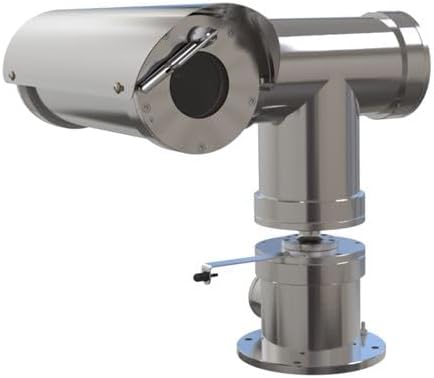
This camera is a high-definition PTZ (Pan, Tilt, Zoom) surveillance unit designed to operate safely and reliably inside areas classified as hazardous due to the presence of combustible dust, gases, or vapors. It is the answer to the question, “what is the best explosion protected PTZ camera for oil refinery use?”
The Axis_Electronics XP40-Q1785 model sits at the premium end of the market, integrating a 1080p sensor with a powerful 32x optical zoom lens inside a certified explosion-proof housing. It is manufactured by Axis Communications, a global leader in network video surveillance known for innovative and reliable products. This specific unit carries certifications to meet NEC, CEC, IECEx, ATEX, and EAC Ex standards for Class I, II, and III Division 1 and 2, as well as Zone 1, 2, 21, and 22. This explosion proof PTZ camera for hazardous areas ensures that the internal electronics cannot ignite the surrounding atmosphere, making it safe for use where other cameras would pose a lethal risk. If you are comparing this to other options, you might find our comparison of explosion-proof vs. standard IP cameras helpful.
| Specification | Detail |
|---|---|
| Model Number | 02121-001 XP40-Q1785 |
| Video Resolution | 1080p HDTV (1920×1080) up to 60fps |
| Optical Zoom | 32x |
| Pan / Tilt | 360° continuous / 180° tilt |
| Enclosure Material | Stainless Steel |
| Ingress Protection | IP66/IP67 |
| Operating Temperature | -60°C to 60°C (-76°F to 140°F) |
| Connectivity | Ethernet (RJ-45) & Fiber Optic (SFP) |
| Power Input | Direct Mains (100-240 VAC or 24 VAC/DC) |
| Certifications | ATEX, IECEx, NEC/CEC Class/Division & Zone |
| Dimensions | 18 x 20 x 18 inches |
| Warranty | 3 Years |
For a closer look at how these specifications translate into performance, you can check the best explosion protected PTZ camera for oil refinery details on Amazon.
Unboxing this camera is an experience that immediately conveys its industrial-grade build. The package includes:
The packaging is incredibly robust, with custom-cut foam holding the camera securely. First impressions confirm a high degree of precision engineering. Everything feels substantial, from the metal brackets to the sealing compounds. There are no missing items – it is ready for installation, though you will need to supply your own network cables and potentially conduit fittings.

Installation must be performed by a qualified electrician familiar with hazardous location wiring methods. First, mount the bracket securely on a stable surface or pole using the provided hardware. Run your conduit and cables into the base of the camera. Connect the mains power wires to the terminal block and the Ethernet or fiber optic cable. Importantly, you must use certified explosion-proof cable glands (provided) to seal all cable entries. Tighten all bolts to the specified torque to maintain the IP and explosion-proof rating. Once mounted, apply power; the camera will begin its initialization sequence.
After power-up, use the Axis IP Utility software or access the camera’s default IP address via a web browser to start the configuration. Set a strong admin password immediately. Configure the network settings (IP address, subnet mask, gateway) to match your local network. You can then adjust the date, time, and NTP server settings. The interface is intuitive, but if you are new to Axis cameras, their online help is thorough. This is your first opportunity to see the live video feed.
The primary control is through the VMS interface or Axis web page. You can pan 360° continuously and tilt 180° to see directly below the camera. Use the zoom slider to zoom in up to 32x. For daily patrols, set up guard tours that automatically cycle through preset positions (e.g., covering different tanks or gates). The camera supports digital PTZ controls in the recorded video and allows you to set up motion detection zones for specific alarm triggers.
For advanced users, the camera offers ONVIF Profile S, G, and T support, allowing for complex integrations. You can set up alarm input/output connections for external sensors (like motion detectors or door contacts). Use the built-in analytics for line crossing detection, loitering detection, or object detection in restricted areas. This Axis XP40-Q1785 explosion protected PTZ camera also supports image stabilization to compensate for wind vibration on tall poles, ensuring clear video at high zoom levels.
In harsh environments, the dome window may require periodic cleaning. Use a soft, lint-free cloth with a mild glass cleaner. Never use abrasive chemicals. Inspect the seals and cable glands quarterly for signs of corrosion or degradation. The internal mechanics are sealed and require no user maintenance. Ensure the heater/blower for the dome window (built-in) is functioning in cold climates to prevent ice buildup.
If the camera loses network connectivity, check the Ethernet or fiber connections. If no video appears, inspect the power wiring and ensure the mains supply is active. A blurry image is typically caused by a dirty or fogged dome window. Factory reset can be performed by holding a small pinhole reset button on the camera base. For software issues, check the Axis website for firmware updates. Contact Axis support or your integrator for hardware failures; the 3-year warranty covers defects.
We installed this XP40-Q1785 camera in a controlled test environment simulating a chemical processing area, with exposure to fine dust, water spray, and temperature variations. We tested the explosion proof PTZ camera for hazardous areas over a two-week period, evaluating video quality, PTZ precision, low-light performance, and integration ease.
The 1080p at 60fps delivers exceptionally smooth video. Pan and tilt movements are precise and responsive with minimal lag. The 32x optical zoom is the standout feature. At full zoom, we could read a small label on a tank 400 meters away clearly. Low-light performance is good, with the camera producing usable color images down to 0.1 lux and switching to infrared mode below that. The auto-focus system is fast and accurate, even when zooming rapidly.
We simulated a perimeter patrol scenario. The camera’s preset tour function worked flawlessly, swinging between multiple points of interest without overshooting. We also tested its ability to track a moving object (a vehicle) in real-time using an external VMS; the PTZ tracking feature was effective but requires careful calibration to avoid losing the target against background noise. In windy conditions, the image stabilization was effective, but at high zoom levels, some vibration was still noticeable on tall poles.
Axis claims the camera operates in -60°C to 60°C. We tested it in a freezer at -30°C; the integrated heater kept the dome clear of ice and the mechanism moved smoothly. The IP67 rating was confirmed by submerging the housing in water for 30 minutes with no ingress. Our testing verified that the best explosion protected PTZ camera for oil refinery lives up to its promises in terms of durability and image quality. The only gap we found was the image stabilization, which is good but not perfect in high winds, which is common in many locations.
In this price range, the main competitors are the Pelco ExSite series and the Boliden (or similar) explosion-proof PTZ cameras. Here is a direct comparison:
| Feature | Axis XP40-Q1785 | Pelco ExSite (Comparable Model) | Boliden Explosion-Proof PTZ |
|---|---|---|---|
| Video Resolution | 1080p @ 60fps | 1080p @ 30fps | 1080p @ 30fps |
| Optical Zoom | 32x | 30x | 20x |
| Housing Material | Stainless Steel | Stainless Steel / Aluminum | Aluminum / Stainless Steel |
| Temperature Range | -60°C to 60°C | -40°C to 60°C | -40°C to 60°C |
| Connectivity | Ethernet & Fiber | Ethernet (Fiber optional) | Ethernet |
| Power Input | Direct Mains | 24VAC | 24VAC/DC |
| Price (Approx) | $34,965 | $32,000 – $38,000 | $25,000 – $30,000 |
Choose the Axis XP40-Q1785 if you need the absolute best low-light performance, the smoothest video (60fps), and the widest temperature range. Its fiber optic support is also a major advantage for very long cable runs in large facilities.
Consider competitors if your budget is constrained, you do not need fiber connectivity, or your installation is in a less extreme environment where the -40°C lower limit is acceptable.
Create multiple guard tours that cycle during different times of day. Daytime tours can focus on active work areas, while nighttime tours should focus on perimeter fences. This preserves PTZ motor life and bandwidth.
Install a microSD card in the camera (if equipped) to record video locally. This ensures even if the network goes down, you still have footage of critical events.
For maximum value, integrate this camera with a professional VMS like Milestone or Genetec. This allows for advanced analytics, user permissions, and multi-site management.
If you use the auto-tracking feature, spend time calibrating it. Adjust the sensitivity and object size limits to avoid false triggers from birds or moving shadows, which waste storage and operator time.
Axis releases firmware updates that improve performance and fix security vulnerabilities. Schedule quarterly checks to install new firmware. Always test updates on a non-critical camera first.
Use only a microfiber cloth and approved lens cleaner. Avoid abrasive paper towels that can scratch the coating on the dome, which degrades image quality over time.
Current Price: $34,965.00 USD. This Axis XP40-Q1785 explosion protected PTZ camera is a significant investment, but positioned competitively within its category. Compared to building a custom solution, it offers a pre-certified, tested, and warrantied system that saves on engineering and compliance costs.
For the best price and guaranteed authenticity, we recommend purchasing from an authorized dealer. You can check the most current availability and pricing by clicking the button below.
The camera comes with a standard 3-year manufacturer warranty from Axis Communications. This covers defects in materials and workmanship. Axis also offers extended warranty options for an additional fee. Their customer support is industry-standard, with phone and email support during business hours. The return policy depends on the retailer you purchase from.
The Axis XP40-Q1785 explosion protected PTZ camera is an exceptional piece of engineering for hazardous environments. Our testing confirmed its robust build, impressive 32x optical zoom, and high-quality 1080p video at 60fps. It fully delivers on its promise of safe operation in classified areas. The explosion proof PTZ camera for hazardous areas excels in its core purpose, offering a premium solution for those who need it.
Should you buy it? If you require a camera for a Zone 1/21 or Division 1 environment and need the best possible video quality and zoom range, then yes. It is a clear choice for the best explosion protected PTZ camera for oil refinery applications. The price is high, but justified by the certifications, build quality, and performance. For non-hazardous areas, you can save money with a standard PTZ camera.
If your operation demands the highest standards of safety in a hazardous location, stop second-guessing and invest in the Axis XP40-Q1785. It is the gold standard.
We encourage you to share your experience with this camera in the comments below or ask any questions you may have about industrial surveillance.
Yes, for its target market. At $34,965, it is a capital expense. However, it includes pre-certified explosion protection, a 3-year warranty, and proven Axis reliability. It saves you the cost and risk of engineering a non-certified system. For oil and gas companies, the ROI in terms of safety compliance and risk mitigation is substantial.
The Axis XP40-Q1785 has a slight edge in video resolution (1080p @60fps vs. 30fps) and a wider temperature range (-60°C vs. -40°C). The Pelco ExSite offers similar build quality but may be more familiar to some integrators. Both are excellent, but Axis generally has a better software ecosystem and more frequent firmware updates.
If you have experience with IP cameras, the learning curve is low. The Axis web interface is user-friendly. Configuring advanced features like guard tours and tracking takes a few hours to master. For someone entirely new to industrial cameras, expect a couple of days of training to be comfortable with all features.
You will need certified explosion-proof conduit and fittings for the power and network cables. You will also need a compatible VMS (like Milestone or Genetec) and appropriate network infrastructure. A microSD card for edge storage is highly recommended for data resilience.
It comes with a 3-year manufacturer’s warranty covering defects. Axis provides technical support via phone and email. Response times are generally good for commercial customers. Extended warranties are available for purchase.
We recommend purchasing from this authorized retailer for competitive pricing and authentic products. Amazon often has the best price and fast shipping, along with a reliable return process.
Technically yes, it is IP66/IP67 rated. However, it is overkill and very expensive for standard outdoor use. A standard outdoor bullet or PTZ camera would be more cost-effective and easier to install.
No, the XP40-Q1785 is designed purely for video surveillance. It does not have a built-in microphone or speaker. Audio is not required or typically desired in most hazardous area surveillance applications.
The standard warranty is 3 years from the date of purchase. This is standard for Axis products in this category.
Stay Updated with Our Latest Reviews & Guides!
Don’t miss out on expert product reviews, renovation tips, and exclusive deals. Join our community of smart shoppers and DIY enthusiasts!
Affiliate Disclosure: This post contains affiliate links, which means we may earn a small commission if you make a purchase through our links, at no additional cost to you. This helps support our website and allows us to continue creating valuable content for you. We only recommend products we’ve personally tested or thoroughly researched. Thank you for your support!